


Artificial Turf Installation: The Ultimate Guide to a Beautiful, Low-Maintenance Lawn
Oct 20, 2026


A beautiful green lawn can transform your outdoor space, but maintaining natural grass often requires constant watering, mowing, fertilizing, and weed control. For homeowners looking for a cleaner, more convenient alternative, artificial turf installation is an increasingly popular solution.
Whether you want to upgrade your backyard, create a pet-friendly space, improve your landscaping, or enhance your property’s curb appeal, synthetic grass offers a practical way to enjoy a lush, green lawn throughout the year.
In this guide, we’ll explore the benefits of artificial turf, how the installation process works, and what you should consider before transforming your outdoor space.
What Is Artificial Turf?
Artificial turf, also known as synthetic grass, is a manufactured surface designed to replicate the appearance and feel of natural grass. Modern turf products feature realistic blade shapes, natural color variations, and durable backing systems that make them suitable for a variety of residential and commercial applications.
Artificial grass can be installed in backyards, front lawns, pool areas, pet runs, playgrounds, patios, and other outdoor spaces. With the right product and professional installation, synthetic turf can provide an attractive, functional landscape with significantly less routine maintenance than natural grass.
Benefits of Artificial Turf Installation
1. Enjoy a Green Lawn All Year
One of the biggest advantages of artificial turf is its consistent appearance. Natural grass can become brown, patchy, or damaged due to weather, foot traffic, pests, and inconsistent watering.
High-quality synthetic grass maintains its green appearance throughout the year, helping your property look clean and well-maintained in every season.
2. Reduce Lawn Maintenance
Traditional lawns require regular mowing, edging, watering, fertilizing, and weed control. Artificial turf eliminates routine mowing and can substantially reduce the time spent maintaining your landscape.
Although occasional cleaning, brushing, and debris removal are still necessary, synthetic grass makes it easier to enjoy your outdoor space without a demanding lawn care schedule.
3. Create a Pet-Friendly Outdoor Space
Artificial turf can be an excellent option for households with dogs and other pets. Properly selected and installed turf can provide a durable surface for playing, running, and relaxing.
For pet areas, proper drainage is especially important. A suitable base, permeable backing, and appropriate cleaning routine help manage pet waste and odors. Be sure to choose a turf system designed for your household’s needs.
4. Improve Your Property’s Curb Appeal
A healthy-looking lawn can make a significant difference in your property’s overall appearance. Artificial turf provides a neat, uniform finish that complements landscaping features, walkways, outdoor kitchens, and patios.
Whether you’re updating a small front yard or redesigning an expansive backyard, synthetic grass can help create a polished outdoor environment.
5. Reduce Watering Requirements
Natural grass often requires frequent irrigation, particularly in hot climates. Artificial turf does not need regular watering to stay green, which can reduce lawn irrigation needs.
Occasional rinsing may still be useful for cleaning, especially in pet areas or dusty environments. Actual water savings depend on your existing lawn care practices and local conditions.
How Does Professional Artificial Turf Installation Work?
A successful artificial turf project involves much more than rolling out synthetic grass. Proper preparation and installation help ensure a smooth, durable surface with reliable drainage.
Step 1: Site Inspection and Planning
The first step is evaluating the installation area. A professional installer considers the existing soil, drainage patterns, intended use, access, and desired appearance.
Accurate measurements help determine how much turf, base material, infill, and edging will be needed.
Step 2: Remove Existing Grass and Debris
Existing grass, weeds, roots, and unsuitable soil are removed to prepare the area. The amount of excavation required depends on the site conditions and the planned turf system.
Proper preparation creates room for a stable base and helps prevent an uneven finished surface.
Step 3: Prepare and Compact the Base
A suitable aggregate base is installed and compacted to create a firm, even foundation. The base material and depth should be selected according to soil conditions, drainage requirements, and how the area will be used.
Correct grading is essential because water must be directed away appropriately rather than allowed to collect beneath the turf.
Step 4: Install the Artificial Grass
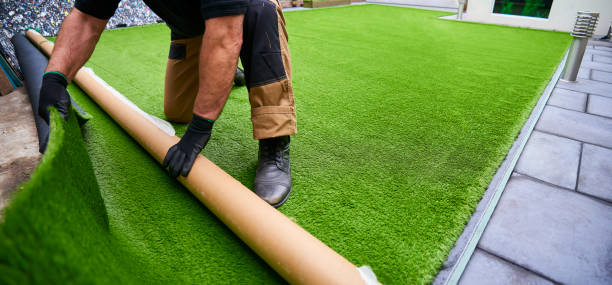
The turf is carefully positioned, trimmed, and aligned. Installers pay close attention to the direction of the grass blades so adjacent sections have a consistent appearance.
When multiple pieces are required, seams must be prepared and joined properly to minimize visible lines and create a uniform finish.
Step 5: Secure the Edges and Seams
The turf is secured using appropriate fasteners, adhesive systems, or edging details, depending on the installation surface and product requirements.
Secure edges help prevent shifting, lifting, and premature wear during everyday use.
Step 6: Add Infill and Brush the Turf
Depending on the selected turf system, an appropriate infill may be spread across the surface to help support the grass blades, improve stability, and contribute to the desired feel underfoot.
The turf is then brushed to help the blades stand upright and achieve a natural-looking finish.
Step 7: Complete the Final Inspection
The final inspection checks the surface, seams, edges, drainage, and overall appearance. The installer should also explain recommended cleaning procedures and any product-specific maintenance requirements.
Choosing the Right Artificial Turf for Your Property
Not all artificial grass products are the same. The best option depends on your budget, the intended application, and the characteristics you want in your finished lawn.
Consider these factors before choosing your turf:
- Blade height: Shorter blades may suit putting greens and high-traffic areas, while medium or longer blades can create a fuller lawn appearance.
- Color and texture: A combination of green shades and realistic blade shapes can help the turf resemble natural grass.
- Durability: Areas with children, pets, or frequent foot traffic may require a product designed for heavier use.
- Drainage: Select a suitable backing and installation system that allows water to pass through efficiently.
- Heat performance: Artificial turf can become hot in direct sunlight. Consider shade, product specifications, and cooling strategies when planning your installation.
- Warranty and quality: Review the manufacturer’s warranty, care instructions, and recommendations for your specific application.
An experienced installer can help you compare products and select a system that suits your outdoor space.
Is Artificial Turf a Good Choice for Florida Homes?
Artificial turf can be an attractive landscaping option for Florida homeowners who want a consistently green lawn without regular mowing or extensive irrigation.
However, Florida’s climate presents several important considerations. Heavy rainfall, high humidity, intense sunlight, and warm surface temperatures can affect how an artificial lawn performs.
A successful installation should include:
- A properly graded and compacted base.
- A drainage system suited to local soil and rainfall conditions.
- Turf designed for the intended level of sun exposure and foot traffic.
- Appropriate consideration of surface temperatures, particularly around pools and play areas.
- A cleaning and maintenance plan that helps keep the surface in good condition.
Professional planning is particularly valuable in areas where heavy rain can expose drainage problems. Choosing the right materials and installation methods can help your synthetic lawn remain attractive and functional.
How Much Does Artificial Turf Installation Cost?
The cost of artificial turf installation varies depending on the size of the area, turf quality, site accessibility, and the amount of preparation required.
Factors that influence the total project price include:
- Square footage of the installation area.
- Type and quality of artificial grass.
- Removal of existing grass, roots, or debris.
- Excavation and base preparation.
- Drainage improvements and grading.
- Edging, seams, infill, and other installation materials.
- Special requirements for pets, putting greens, or high-traffic areas.
For an accurate estimate, request an on-site assessment and detailed quote. Comparing proposals based on materials, preparation, drainage, and workmanship can help you understand the value of each option rather than choosing solely by the lowest price.
How Do You Maintain Artificial Turf?
Artificial turf requires less routine maintenance than natural grass, but occasional care is still important.
To keep your lawn looking its best:
- Remove leaves and debris regularly.
- Rinse the surface as needed to remove dust and dirt.
- Clean pet waste promptly and follow the turf manufacturer’s cleaning recommendations.
- Brush high-traffic areas periodically to help restore the upright position of the grass blades.
- Inspect seams, edges, and drainage areas occasionally.
- Avoid harsh chemicals or maintenance equipment that could damage the turf fibers or backing.
The appropriate maintenance routine depends on the product, weather conditions, and how frequently the lawn is used.
Why Professional Installation Matters
Even premium artificial grass can perform poorly if it is installed on an unstable base or if drainage is overlooked.
Professional installation helps address important details such as surface preparation, grading, compacting, seam placement, edge security, and product selection. These details influence the lawn’s appearance, comfort, and long-term performance.
Working with an experienced artificial turf installer also allows you to discuss your goals, compare suitable materials, and plan a solution tailored to your property.
Transform Your Outdoor Space With Artificial Turf
Artificial turf installation can help create a beautiful, functional outdoor space with less routine lawn maintenance. From front yards and backyards to pet areas and poolside landscaping, the right synthetic grass system can provide a practical alternative to natural grass.
The key is choosing quality materials and ensuring that the installation is designed around your property’s drainage, usage, and environmental conditions.
Ready to upgrade your lawn? Contact our team today to discuss your artificial turf installation project and request a personalized quote. We’ll help you explore your options and find a solution that fits your space, style, and budget.
Contact us today to get started on your artificial turf transformation!